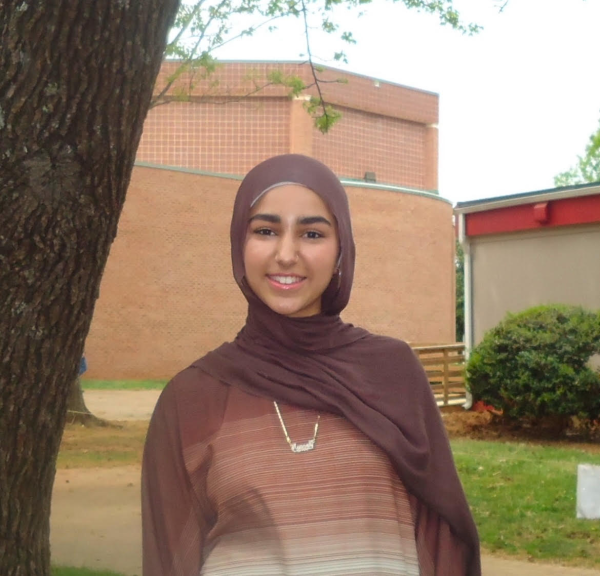
Eid al-Fitr is often described as a celebration—but for many students, it feels more like a culmination. Marking the end of Ramadan, the holiday transforms a month of fasting, discipline and reflection into a day centered on joy, community and connection. Through the experiences of Guilford students Inaya Ejaz and Ayuzah Shah, Eid comes into focus not just as a religious observance, but as a deeply personal and evolving tradition shaped by both culture and circumstance.
For both students, the day begins in a familiar way: at the mosque for the morning Eid prayer, a shared ritual that anchors the celebration. From there, the atmosphere quickly shifts into something more festive.
“They serve food—halwa puri, sometimes donuts and other desserts. There’s inflatables,” Ejaz said.
What begins as a spiritual gathering becomes a lively community event, where families linger, eat and reconnect. Shah describes a similar rhythm, emphasizing how widespread these traditions are.
“Everyone goes to the mosque in the morning for the prayer, and everyone usually makes desserts in their own house,” she said.
While the structure of Eid morning is consistent, the rest of the day unfolds differently for everyone. For Ejaz, it often means moving between gatherings, visiting friends and family throughout the day.
“We kind of just jump from party to party,” she said.
These visits are filled with food, conversation and laughter, forming the social core of the holiday. Woven into that busy schedule are smaller, more personal traditions.
“A lot of people take the annual Eid nap … one to two hours,” Ejaz said.
Gift-giving is another key part of Eid, especially for younger people who receive money or presents as a way to celebrate the end of Ramadan. For Shah, this tradition is both familiar and meaningful.
“It’s just parents rewarding their kids … and it’s also just a time of gift-giving,” she said.
Yet for students, Eid does not exist separately from daily responsibilities. Academic schedules, sports and extracurricular commitments often shape how—and how fully—the day can be celebrated. This year, Shah had to balance Eid with a taekwondo tournament the following day.
“It was a little bit hard to manage practice and celebration,” Shah said. “But I ended up being able to do both.”
Ejaz experienced a different kind of change. Without her usual packed schedule of events, she found time to connect with friends in a way she normally couldn’t.
“I got to see my friend group on Eid, which is unusual,” she said.
That moment—spent taking photos together in a garden—became one of the highlights of her day, underscoring how Eid can be shaped by both planning and spontaneity.
When asked what Eid means to them, both students return to the same central idea: connection.
Ejaz said that “Eid means seeing my family … celebrating the end of a very difficult but spiritual month.”
“It’s definitely a reward,” Ejaz said.
For Shah, the meaning of Eid is rooted in belonging and shared experience.
“It’s like a time of community and family… I’m reminded of the fact that I have a community here,” she said.
That sense of community, Shah noted, can feel different depending on where Eid is celebrated. Reflecting on a time she spent the holiday in Pakistan, she described a more immersive experience.
“I didn’t have to adjust my school life or my sports life … everyone was just adherent,” she said. “I definitely felt more unifying in Pakistan.”
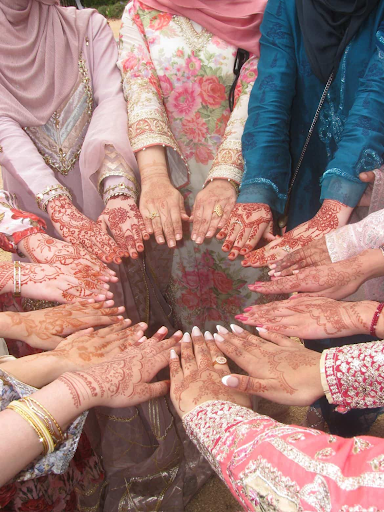
Preparation for Eid begins even before the day itself, often the night before, when many get henna, or mehendi, applied. Both Ejaz and Shah turned to their friend Udaya Sri Parthiban this year, fitting appointments into already busy schedules.
“I got my henna done last minute,” Ejaz said.
Shah shared the same sentiment.
“I just had to go right after taekwondo practice,” Shah said.
For Parthiban, who runs a small henna business, Eid is the busiest—and most meaningful—time of year.
“My business peaks during Eid, when people start needing last-minute mehendi,” said Parthiban.
What started as a childhood habit grew into something more during the pandemic. “I got into it a lot during COVID because I really had nothing else to do,” she said.
Now, her work is woven into the celebrations of those around her, including Ejaz and Shah, who have returned to her year after year.
“They say that they will never go to any other henna artist … they’re really loyal to me,” Parthiban said.
Even as schedules became more hectic, especially during the school year, the tradition of getting their henna done from Parthiban persisted.
“This year was more like we couldn’t find time, just because of school and all of our extracurricular commitments,” Ejaz said.
Ultimately, Eid resists a single definition. It can be structured or spontaneous, busy or relaxed, shaped as much by community as by circumstance. But across these variations, its meaning remains consistent: a day that brings people together after a month of discipline and reflection.